


PKB gives me the immediate, detailed data over time that I need to do my own research. It transforms my doctor’s appointments from a one-way briefing into a collaborative discussion on how to tweak my lifestyle and try to stay ahead of my condition

Background
For two decades, kidney patients have been pioneers in self-care. They and their doctors deployed home dialysis. They raced ahead of other specialities in digital health, releasing test results real-time to patients through the bespoke app PatientView. As the digital landscape evolved and data security mandates tightened, the UK Kidney Association (UKKA) needed a modern system. Rebuilding the platform was cost-prohibitive.
The UKKA required a successor that could not only match the existing service but enhance it with advanced features for self-management and early prevention. In 2021 the charity selected Patients Know Best (PKB) to spearhead this new era with a secure, borderless, and patient-centric record.
The Problem
The transition was driven by the need to bridge the gap between a valued legacy tool and the complex requirements of modern integrated medicine:
- The security mandate: Bringing a legacy viewer in line with current GDPR and NHS data protection standards was a complex, expensive hurdle.
- A holistic perspective: an estimated 90% of Chronic Kidney Disease (CKD) patients manage at least one other long-term condition. A ‘kidney-only’ view provided an incomplete picture, especially for patients treated across different specialist centres.
The objective was to move from a simple results viewer to a more comprehensive platform that mirrors the patient journey - integrated, longitudinal, and accessible across all care settings - with enhanced functionality and the potential for future research.
The Solution
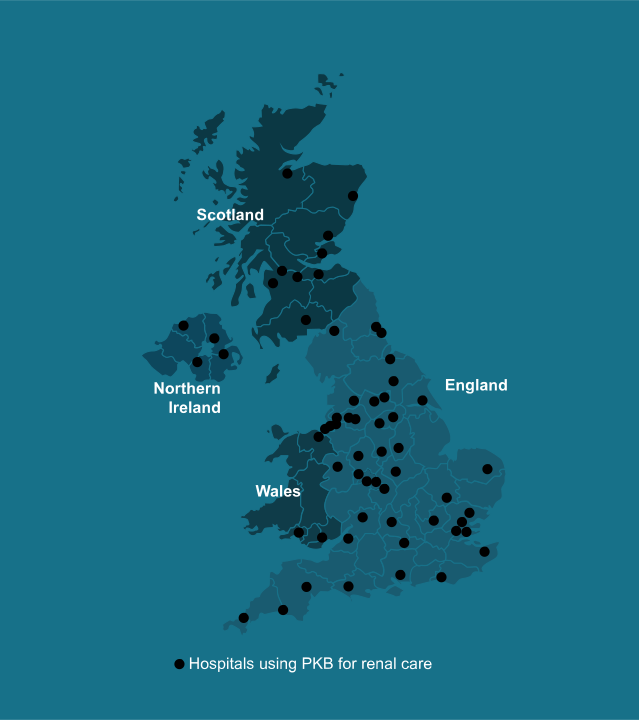
The transition involved onboarding all 76 UK Kidney Units linked to the UKKA, migrating historical data, and introducing features designed for daily life with CKD:
- Familiarity Meets Innovation: PKB adapted its interface to include an additional tabular results screen - retaining the view patients were accustomed to - while offering longitudinal charts to track test trends over time.

- The Information Library: direct access to kidney-focused resources from Kidney Care UK and the British Dietetic Association.
- Patient-Entered Data: Patients can record blood pressure, weight, and glucose to monitor their condition between appointments.
- Acute data: Where PKB is already used by a hospital, all patient data is now aggregated into their single PKB record.
GP Data Integration: As of 2025, patients in England can also add their GP data to their PKB record. This brings medications and diagnosis, and full primary care history into a single view alongside hospital results.
Being able to see the 20 factors monitored promptly helps you learn about trends and, with the consultant's help, understand the causes
Pilot Innovation: Borderless Care
The National Renal Complement Therapeutics Centre (NRCTC) in Newcastle recently launched a project to support rare diseases like aHUS. By using PKB, specialist nurses can monitor records remotely. The long-term aim is to enable patients to have blood tests in their local community rather than travelling hours to a specialist centre.
Outcomes
The migration succeeded in moving a highly loyal patient base to a modern platform without losing the historical data they valued:
- Total Registered Patients: ~50,000 across 76 UK Kidney Centres.
- Active Engagement: 52% of registered patients log in at least once a month. A majority log in to view their test results within 48 hours.
- Frequent Use: 40% of users log in more than twice a month.
- Data Volume: 150+ million test results securely released into PKB patient records in the UK.
Paediatrics: Units like Glasgow children’s centre have embraced PKB’s sharing capabilities for carer access, ensuring parents and carers have real-time data to manage their children's complex care.
Future Vision - From Management to Prevention
Kidney disease represents a significant economic burden, costing the NHS over £6 billion annually. The condition is often "silent" until expensive, life-sustaining treatments like dialysis—costing £34,000 per patient per year—become necessary. Currently, an estimated 1 million people in the UK live with undiagnosed CKD, and 30% of those with clear lab markers remain "uncoded" in GP systems.
The long-term goal is to shift the needle from managing disease to preventing it:
- SNOMED-Coded Research: Integration with GP data provides a wealth of coded information. Subject to governance, the UKKA can pull this into the UKRDC Data Repository to fuel research into rare diseases (via RaDaR).
- Population Health Management (PHM): PKB’s PHM engine can automatically scan coded data—such as rising creatinine or proteinuria—to flag at-risk individuals across the population with data in PKB. This allows for early intervention, such as the use of SGLT2 inhibitors, which could prevent over 10,000 deaths annually.
Partnering with a leading provider of digital personal health records is a significant step for the UK Kidney Association and showcases our determination to provide quality platforms for patients to streamline their care.


